If you are tired of cutting boards that absorb odors, develop deep knife marks, stain easily, or require constant maintenance, the Katori Titanium Cutting Board offers a very different approach to everyday food preparation.
Instead of using traditional wood or plastic, Katori is marketed as a titanium cutting board with a smooth, non-porous surface designed for everyday kitchen use. It is also promoted as double-sided, dishwasher-safe, heat-resistant, and easy to clean.
But does a titanium cutting board actually make sense for a modern kitchen?
In this detailed Katori Titanium Cutting Board review, we will look at its design, material, cleaning requirements, size, knife compatibility, advantages and limitations, and the things you should consider before buying.
What Is the Katori Titanium Cutting Board?
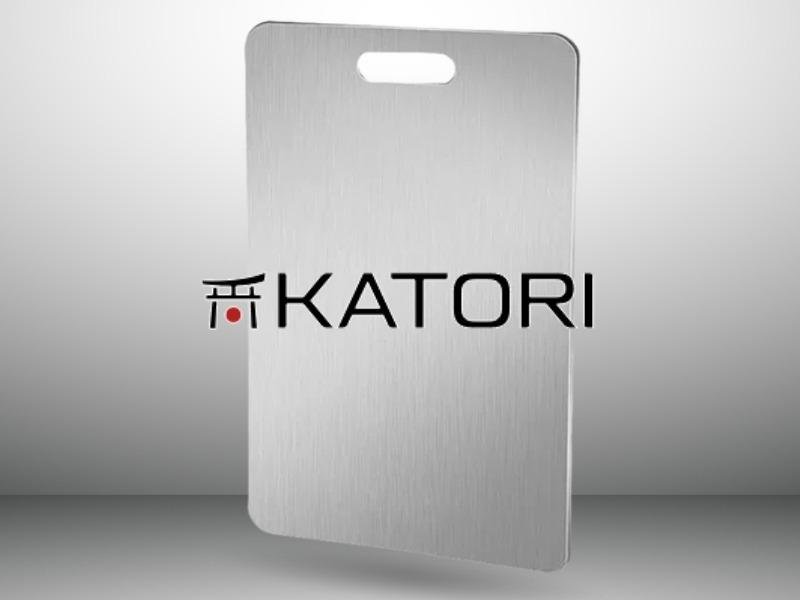
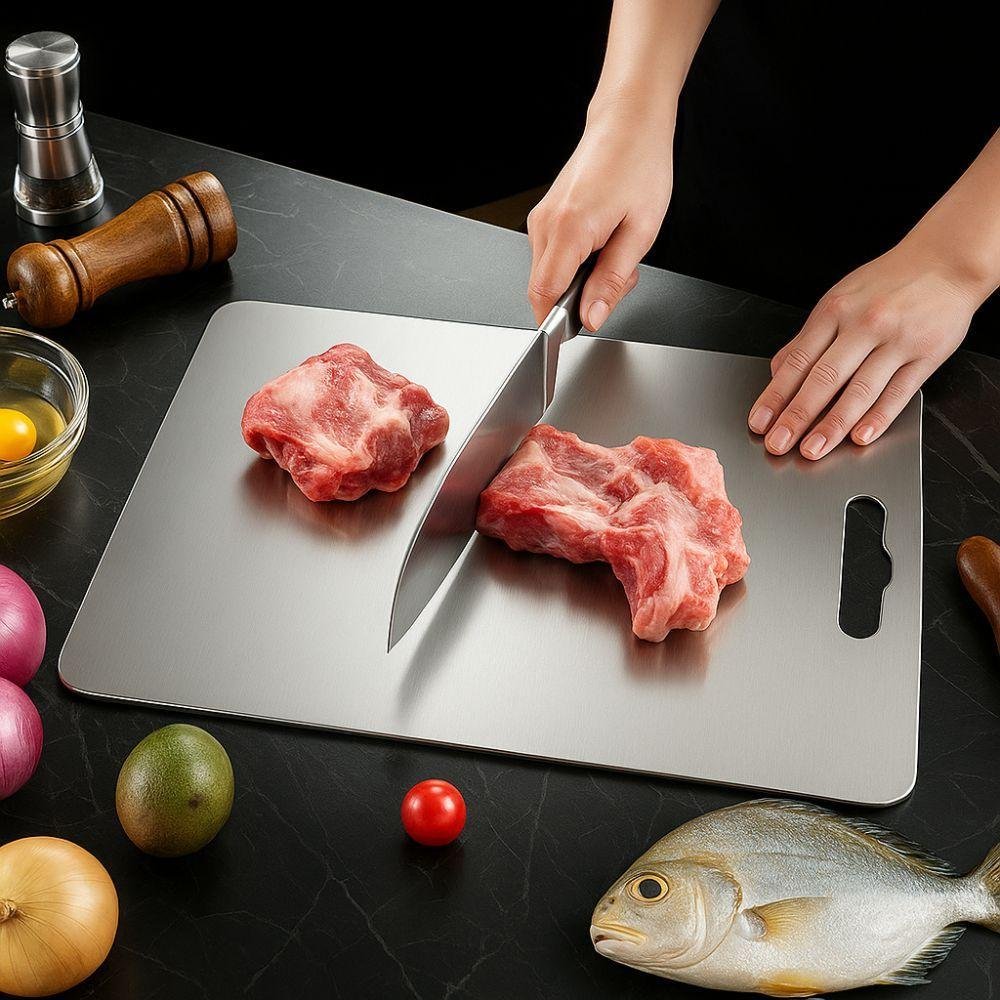
The Katori Titanium Cutting Board is a compact food-preparation board designed around a titanium surface rather than conventional plastic or wood.
According to product information published by the seller, the board uses a titanium construction and has a smooth, non-porous surface. The published dimensions are approximately 11.4 x 7.9 inches (29 x 20 cm), making it more suitable for everyday food preparation than for very large cutting tasks.
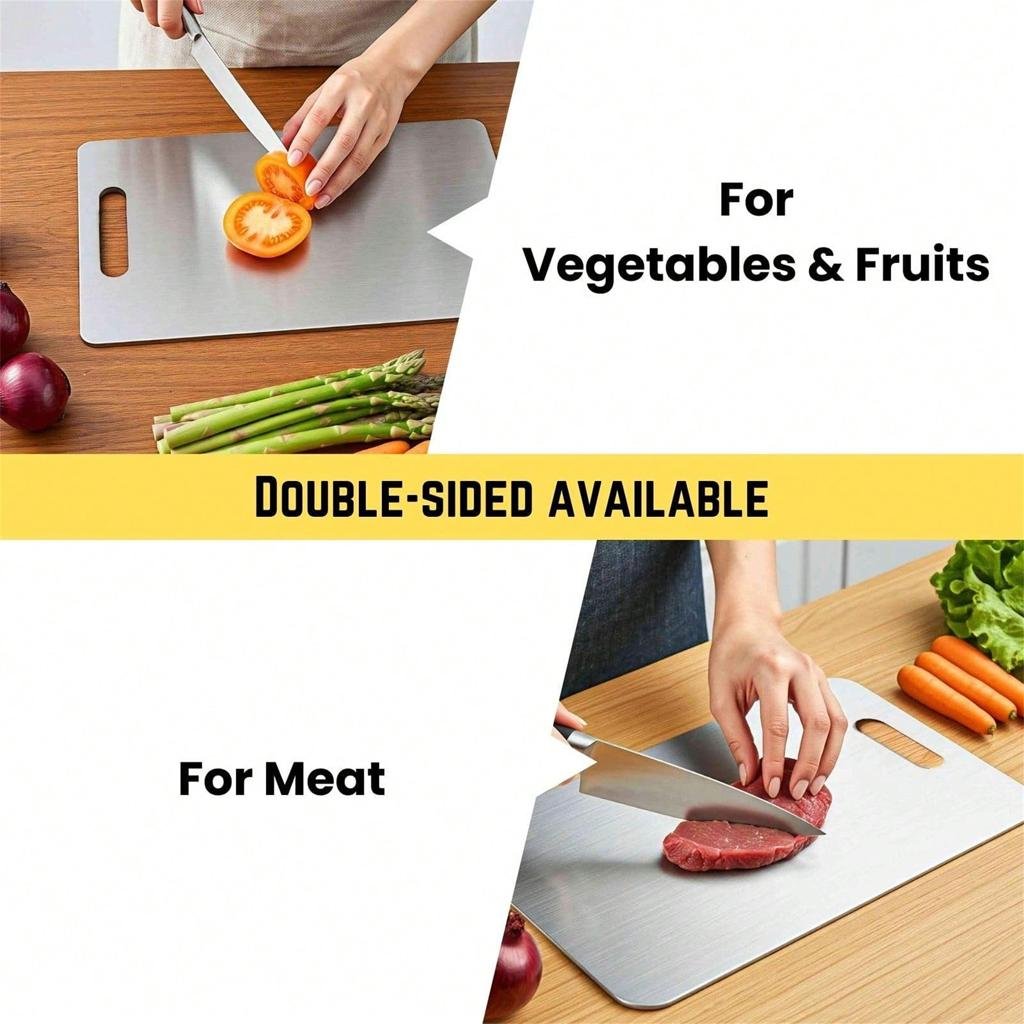
The board is designed to be used on both sides. This can be useful when preparing different types of ingredients, although normal food-safety practices still matter: the board and utensils should be properly washed between raw meat and ready-to-eat foods.
The basic idea behind Katori is simple: combine the easy-clean characteristics of a non-porous surface with a durable metal construction.
Why Choose a Titanium Cutting Board?
Traditional cutting boards each have advantages and disadvantages.
Wooden cutting boards can provide a pleasant cutting experience and are relatively gentle on knife edges, but they require more care. They can absorb moisture and odors and may require regular conditioning depending on the type of wood.
Plastic boards are lightweight, inexpensive and convenient, but knife marks can accumulate over time.
Glass and stone surfaces are extremely hard and easy to clean, but their hardness can be harsh on knife edges.
Titanium occupies an interesting middle ground.
The main advantage claimed for the Katori Titanium Cutting Board is its non-porous surface. A non-porous material does not absorb liquids in the same way porous materials can, which makes cleaning and odor resistance important potential advantages.
An independent review of Katori similarly identifies the non-porous nature of titanium as one of the product’s more credible material advantages, while cautioning against treating marketing terms such as “antibacterial” as equivalent to independently certified antimicrobial performance.
Katori Titanium Cutting Board Features
Let’s take a closer look at the main features.
1. Titanium Construction
The defining feature is obviously the material.
Katori is marketed as a titanium cutting board rather than a conventional plastic or wooden board. The manufacturer describes it as a solid titanium preparation surface.
This gives the board a very different feel from conventional cutting boards.
It has a firm, smooth surface and does not have the grain structure associated with wooden boards.
2. Non-Porous Surface
One of the most interesting reasons to consider a titanium cutting board is the non-porous surface.
Food juices, moisture and odors are less likely to penetrate a non-porous material than a porous surface.
That can make everyday cleanup considerably simpler.
However, it is important to make a distinction: non-porous does not automatically mean that a cutting board eliminates bacteria or makes food preparation risk-free.
Proper cleaning and food-handling practices remain essential.
3. Double-Sided Design
The Katori board can be used on both sides.
This is particularly convenient for people who want a compact preparation surface without having to immediately purchase several different boards.
The seller promotes the two-sided design as useful for separating different food-preparation tasks.
For best food-safety practices, however, users should still wash the board thoroughly between raw and ready-to-eat ingredients.
4. Easy Cleaning
Cleaning is arguably one of the strongest reasons to consider a titanium cutting board.
Katori’s published care information recommends washing the surface with warm water and mild soap and drying it with a soft cloth. The seller also describes the board as dishwasher-safe.
Unlike wooden boards, there is no regular oiling routine.
That makes Katori particularly interesting for people who want a low-maintenance kitchen tool.
5. Compact Size
The published size of approximately 11.4 x 7.9 inches is both an advantage and a limitation.
For vegetables, fruit, herbs, smaller cuts of meat and everyday meal preparation, the compact footprint can be convenient.
It is also easier to store than a large butcher-block-style cutting board.
On the other hand, anyone who regularly prepares large quantities of food may find the available cutting area restrictive.
If you frequently break down large chickens, prepare large cuts of meat or cook for a large family, a larger secondary cutting board could still be useful.
Is Katori Good for Knives?
This is probably one of the biggest questions people have when they first see a metal cutting board.
After all, metal and kitchen knives might seem like an obvious bad combination.
The important comparison is between titanium and extremely hard cutting surfaces such as glass or stone.
Katori is marketed as being more knife-friendly than those very hard surfaces. Independent reviews also describe titanium as less harsh on knife edges than glass or stone, although softer materials such as quality wood remain a different experience.
Therefore, I would not describe Katori as the absolute gentlest possible surface for a knife.
Instead, its appeal is the combination of:
- A firm cutting surface
- Non-porous construction
- Easy cleaning
- No wood oiling
- No plastic cutting surface
- More forgiving characteristics than glass or stone
That combination is what makes the product interesting.
Katori vs. Wood Cutting Boards
Wood remains popular for a reason.
A good wooden cutting board feels natural under a knife and can be very comfortable for food preparation.
However, wood generally requires more care.
Depending on the type of wood and construction, it may require drying, cleaning and periodic oiling.
Katori takes the opposite approach.
The titanium surface is designed to be low maintenance, and the seller does not recommend an oiling routine.
For someone who values convenience and easy cleaning, that difference could be significant.
Katori vs. Plastic Cutting Boards
Plastic cutting boards are inexpensive, lightweight and widely available.
Their biggest practical advantage is price.
However, plastic surfaces can develop visible knife grooves over time.
Katori’s titanium surface is intended to provide a more durable alternative without a plastic cutting surface.
That doesn’t necessarily make titanium the right choice for every kitchen. Someone looking for the cheapest possible cutting board may still prefer plastic.
But for shoppers specifically looking for a long-lasting titanium cutting board, Katori presents a substantially different proposition.
What About Heat Resistance?
Another feature associated with Katori is heat resistance.
The product’s marketing describes the board as suitable for handling heat and hot cookware.
This is useful because it gives the board potential versatility beyond simple chopping and slicing.
Nevertheless, I would still follow the manufacturer’s current care instructions rather than assuming that every extremely hot cooking situation is appropriate.
What Are the Main Drawbacks?
No cutting board is perfect, and Katori has some limitations worth considering.
The Size Is Relatively Small
At approximately 11.4 x 7.9 inches, Katori is a compact board.
That is convenient for storage and everyday preparation, but it may not be enough for large food-preparation jobs.
The Cutting Feel Is Different
If you are accustomed to wooden cutting boards, a titanium surface will feel different.
Titanium is firm and does not provide the same cushioned sensation as wood.
Some people may appreciate that solid feel, while others may prefer the softer feedback of traditional wooden boards.
Documentation Is Worth Checking
This is an important point for buyers.
Some independent research into Katori notes that the manufacturer does not clearly publish a specific titanium grade or third-party food-safety certification.
Therefore, if the exact titanium grade is important to you, check the current product documentation or ask the seller before purchasing.
This is especially important because online product pages can change over time.
Who Is the Katori Titanium Cutting Board For?
The Katori Titanium Cutting Board may be particularly interesting for:
- Home cooks who want a low-maintenance cutting board
- People who dislike plastic cutting surfaces
- Buyers interested in titanium kitchen products
- People who want a non-porous preparation surface
- Small kitchens where storage space matters
- Campers or people who value portable kitchen equipment
- Cooks who want a board that does not require wood conditioning
It may be less suitable for people who:
- Prefer the soft feel of traditional wood
- Regularly prepare very large quantities of food
- Want the cheapest cutting board available
- Prefer a very large work surface
Is the Katori Titanium Cutting Board Worth Considering?
The answer depends on what you want from a cutting board.
If your priority is the lowest possible price, there are certainly cheaper options.
But if your priorities are durability, easy cleaning, a non-porous surface and a modern alternative to plastic or wood, Katori is an interesting product to investigate.
The strongest part of the product proposition is not necessarily the more aggressive marketing language. It is the basic material choice.
Titanium provides a smooth, non-porous and durable surface, while Katori combines that material with a compact, double-sided design.
At the same time, buyers should keep expectations realistic. Claims such as “antibacterial,” “lifetime” durability or extremely broad health benefits should be evaluated according to the actual documentation provided by the seller rather than marketing language alone. An independent review has specifically highlighted this distinction.
Final Thoughts on Katori
The Katori Titanium Cutting Board is an unconventional alternative to the wood and plastic cutting boards most people are familiar with.
Its biggest strengths are its titanium construction, non-porous surface, easy cleaning, compact dimensions and double-sided design.
Its biggest limitations are the relatively small work area and the fact that titanium provides a different cutting feel from traditional wood.
For someone specifically searching for a titanium cutting board for everyday kitchen use, Katori is certainly worth researching further.
Before ordering, check the current price, shipping conditions, return policy and product specifications on the sales page, since promotional offers and product information can change.
Check the current Katori offer here:
Katori Titanium Cutting Board — Current Offer
FAQ — SEO SECTION
Is Katori a real titanium cutting board?
Katori is marketed by its seller as a titanium cutting board with a non-porous surface. Current product pages describe the board as titanium and approximately 11.4 x 7.9 inches. Buyers who require a specific titanium grade should verify the current product documentation before ordering.
Is the Katori Titanium Cutting Board dishwasher safe?
The seller describes Katori as dishwasher-safe. Hand washing with warm water and mild soap is also described as an appropriate cleaning method.
Will a titanium cutting board dull knives?
Titanium is a firm material, so it should not be considered identical to a soft wooden cutting board. However, product information and independent reviews describe Katori as less harsh on knife edges than very hard surfaces such as glass or stone.
What size is the Katori Titanium Cutting Board?
The commonly published dimensions are approximately 11.4 x 7.9 inches, or 29 x 20 cm.
Does Katori require oiling?
Unlike many wooden cutting boards, Katori does not require a regular oiling routine according to the seller’s care instructions.
Deixe um comentário